Why In News?
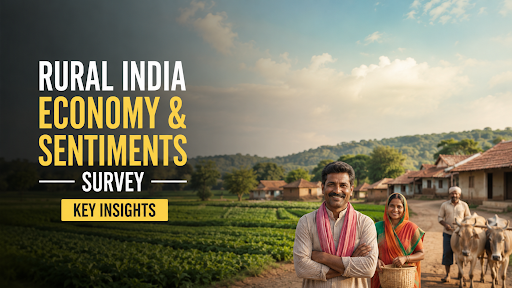
The National Bank for Agriculture and Rural Development (NABARD) releases its 12th Round of the bi-monthly Rural Economic Conditions & Sentiments Survey (RECSS) for July 2026.
What is the Rural Economic Conditions & Sentiments Survey (RECSS)?
The RECSS is a bi-monthly household survey conducted by NABARD. It measures both quantitative data (like income, daily consumption, and loan borrowings) and qualitative data (like how people feel about future jobs and inflation).
The main objective of the survey is to evaluate the real-world impact of government welfare schemes and to capture the current economic health and future financial hopes of rural families.
What are the Key Findings of the Latest Survey?
Weak Income Growth
Over 52% of households state their incomes remain completely unchanged, while 19.8% to 20% report a direct decline in their earnings over the last year.
Rising Cost of Living
Living in villages is becoming very expensive. 74.1% of households report elevated consumption costs. Families now spend a massive 66.5% of their total monthly income just on basic daily consumption.
Higher Dependence on Informal Credit
Villagers are increasingly borrowing money from outside the banking system. The proportion of households relying exclusively on informal credit sources (like friends, family, and local moneylenders) has jumped to 23.6%, which is the highest level observed across all survey rounds.
Weakening Future Income Expectations
Only 39.3% of respondents expect their income and employment conditions to improve in the next quarter. This is the lowest expectation score since the survey began, driven by fears of bad monsoons.
Significance of the Findings
Indicator of Rural Distress: Real wage growth in rural areas plunges to a mere 0.18% in early 2026, compounding the suffering of poor families as prices rise.
Impact on Agriculture: Anticipated strong El Niño climate conditions pose a massive downside risk to agricultural production, threatening to destroy crops and slash farm incomes further.
Implications for Economic Growth: The Reserve Bank of India (RBI) Consumer Confidence Survey confirms that the rural Current Situation Index falls to 95.2, indicating that villagers cut back heavily on non-essential, discretionary spending.
Financial Inclusion Challenges: Despite government financial inclusion drives, rising dependence on informal credit shows that formal banks fail to serve the poorest farmers quickly during emergencies.
Conclusion
To secure the future of rural India, policymakers must shift focus from mere welfare transfers to building climate-resilient agriculture, modern non-farm jobs, and accessible formal credit.
Source: DOWNTOEARTH
|
PRACTICE QUESTION Q. "Sustained rural income growth is essential for inclusive economic development and macroeconomic stability." Discuss. 150 words |