Why In News?
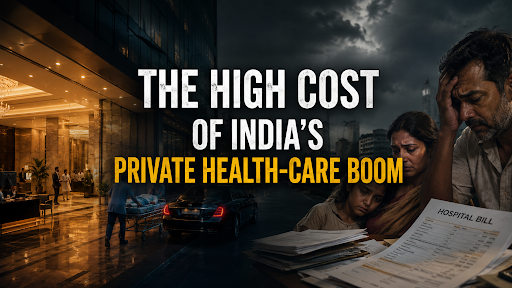
The Parliamentary Standing Committee on Health and Family Welfare warned against predatory private hospital pricing, corporate profit-extraction, and catastrophic out-of-pocket medical expenditure across India.
Highlights of the Parliamentary Standing Committee on Health Report
Benchmarking Room Tariffs to 3-Star Hotels: Proposed capping basic metropolitan private hospital room rents to the average prevailing tariff of nearby three-star hotels, eliminating room category as an artificial cost multiplier for doctor fees and routine diagnostics.
20% Ceiling on Medicine & Device Trade Margins: Recommended capping the gap between the landed/manufacturing cost and the Maximum Retail Price (MRP) of medicines and medical consumables to a maximum of 20%.
Medical Device Price Regulation Score (MDPRS): Formulated a 100-point scoring matrix (evaluating disease burden, volume, price variation, and import reliance) to bring essential stents, orthopedic implants, and critical surgical devices under statutory price control.
Mandatory Upfront Cost Estimates & Financial Navigators: Directed hospitals to provide binding, itemized pre-treatment cost estimates and deploy hospital financial navigators to assist families before inpatient admission.
Standardised Package Rates via Diagnosis-Related Groups (DRGs): Advocated transitioning private hospital billing from fragmented fee-for-service models to pre-fixed DRG episode packages.
Cross-Subsidisation from Medical Tourism: Mandated that large corporate hospital chains earning high revenues from international medical value travel must reserve beds and cross-subsidize care for poor Indian citizens under Ayushman Bharat (AB-PMJAY).
Re-evaluating 100% Automatic FDI in Hospitals: Urged the government to scrutinize foreign private equity acquisitions (brownfield investments) to prevent monopolistic hospital cartels.
Affordable Insurance for the "Missing Middle": Called for simplified, low-cost health insurance products (akin to expanded Aarogya Sanjeevani) to cover the 40–50 crore middle-income citizens currently outside government safety nets
Healthcare Sector in India
Mixed Delivery Model: Operates as a dual healthcare delivery system where a subsidised public sector co-exists with a dominant, fast-expanding private commercial sector.
Private Sector Dominance: Private healthcare accounts for nearly 70% of outpatient consultations and 60% of all inpatient hospital admissions in India. (Source: NITI Aayog)
Rapid Market Valuation: India’s private healthcare market reached $372 billion in 2025–26, propelled by single-specialty chains, multi-specialty corporate hospital networks, diagnostics, and medical tourism.
Public Health Expenditure (GHE): Government health expenditure stands at approximately 1.9% of GDP, falling short of the National Health Policy 2017 target of 2.5% of GDP and the global benchmark of 4–5%.
Out-of-Pocket Expenditure (OOPE) Trajectory: OOPE as a share of Total Health Expenditure (THE) declined from 62.6% in 2014-15 to 43.4% in 2022-23 (and below 40% in 2025-26 estimates), yet absolute OOP spending remains catastrophic for lower-middle-class households.
Doctor-to-Population Ratio: India achieved an aggregate modern medicine doctor-population ratio of 1:834 (exceeding WHO's 1:1,000 norm), but doctors remain heavily concentrated in urban metropolitan private hospitals.
Bed Availability Deficit: Total hospital bed density is 1.3 beds per 1,000 people, well below the World Health Organization (WHO) guideline of 3 beds per 1,000 population.

Why is Private Healthcare Growing Rapidly in India?
Public Sector Capacity Deficits & Underfunding: Overcrowded district hospitals, long surgical waiting lists, and primary health centre doctor shortages drive desperate families toward private clinics.
Epidemiological Transition toward Non-Communicable Diseases (NCDs): Cardiovascular ailments, cancers, diabetes, and organ failures require specialized tertiary intensive care that public secondary facilities rarely provide.
Aggressive Private Equity & Venture Capital Infusions: Global PE funds have invested billions in hospital network rollouts, diagnostic laboratories, and robotic surgery suites to capture high margins.
Boom in Medical Value Travel (Medical Tourism): World-class clinical expertise at one-fifth the cost of Western nations attracts over 6.5 lakh foreign patients annually, yielding foreign exchange of over $3 billion.
Expansion of Health Insurance Penetration: Ayushman Bharat (PM-JAY) and commercial health insurance policies guarantee third-party reimbursements, incentivizing private hospital expansion into Tier-2 and Tier-3 cities.
What are the Major Problems with Private Healthcare?
Catastrophic Health Expenditure & Medical Impoverishment: Severe medical emergencies remain the leading cause of rural and peri-urban household indebtedness, pushing over 4.5 crore Indians into poverty annually. (Source: WHO)
Information Asymmetry & Supplier-Induced Demand: Patients cannot independently evaluate medical necessity; corporate targets incentivize unnecessary diagnostic testing, prolonged ICU stays, and caesarean deliveries.
Predatory Room Tariffs & Arbitrary Pricing Multipliers: Private hospitals use deluxe and private room tiers as multipliers to double or triple consultation, surgical, and nursing service charges.
Exploitative Markups on Medicines and Consumables: In-house hospital pharmacies mark up surgical gloves, syringes, and branded pharmaceuticals by 100% to 500% over manufacturing costs.
Severe Urban-Rural Geographical Maldistribution: Over 75% of private tertiary hospital beds and medical specialists are clustered in top metropolitan cities, leaving rural populations medically neglected.
Brain Drain from Public to Private Health Sector: Lucrative corporate compensation packages and lighter administrative workloads pull senior clinicians, surgeons, and nurses away from government medical colleges.
Impact of Increasing Private Healthcare
|

Government Initiatives for Affordable Healthcare
Ayushman Bharat - PM-JAY: Provides health cover of ₹5 lakh per family per year for secondary and tertiary hospitalisation to over 55 crore vulnerable citizens.
Ayushman Arogya Mandirs (Health & Wellness Centres): Operationalised over 1.73 lakh centres delivering comprehensive primary healthcare, free essential drugs, and diagnostic tests at the grassroots.
PM-ABHIM (Pradhan Mantri Ayushman Bharat Health Infrastructure Mission): Outlay of ₹64,180 crore to establish critical care hospital blocks in all 730+ districts and strengthen national laboratory surveillance networks.
Pradhan Mantri Bhartiya Janaushadhi Pariyojana (PMBJP): Operating over 14,000+ Jan Aushadhi Kendras providing quality generic medicines at 50% to 90% lower prices compared to branded equivalents.
National Medical Commission (NMC) Expansion: Increased MBBS and postgraduate medical seats over the last decade, establishing new AIIMS institutions and upgrading district hospitals to government medical colleges.
Price Capping by NPPA: National Pharmaceutical Pricing Authority statutory caps on ceiling prices of essential drugs, coronary stents, and orthopedic knee implants.
What India Can Learn from Domestic & International Successful Models
International Best Practices
-
Thailand’s Universal Coverage Scheme (UCS): Financed through general taxation; uses closed-end capitation payments and Diagnosis-Related Groups (DRGs) to provide comprehensive healthcare to 99% of citizens with zero point-of-service poverty.
-
United Kingdom National Health Service (NHS): Publicly funded and delivered healthcare free at the point of clinical delivery, acting as a universal safety net.
-
Costa Rica Primary Healthcare Model: Invested heavily in multidisciplinary community health teams (EBAIS), achieving developed-world life expectancy at a fraction of Western expenditure.
Domestic Success Stories
-
Tamil Nadu Medical Services Corporation (TNMSC): Fully automated, transparent, centralized procurement and logistics system supplying high-quality generic drugs and consumables at rock-bottom costs with zero stock-outs.
-
Kerala’s Aardram Mission: Upgraded primary health centres into Family Health Centres (FHCs) with web-based appointments, evening OPDs, and comprehensive chronic disease registries.
Way Forward
Raise Public Health Outlay to 2.5%–3% of GDP, as per National Health Policy 2017: Increase budgetary health allocations across Central and State budgets, ensuring that states allocate at least 8% of their annual state budgets to public health infrastructure.
Implement Standardised DRG Episode Package Rates: Mandate standardized, all-inclusive Diagnosis-Related Group (DRG) package rates for private hospital inpatient admissions, eliminating open-ended billing itemization.
Enforce Statutory Trade Margin Caps on Consumables: Restrict trade margin markups on unlisted medical devices, surgical disposables, and diagnostic reagents to a maximum ceiling of 20% to prevent pharmacy profiteering.
Institutionalise Independent Clinical Audits & Standard Treatment Guidelines: Empower the National National Accreditation Board for Hospitals & Healthcare Providers (NABH) and State Health Authorities to conduct random clinical audits, curbing unnecessary caesareans, stent placements, and ICU over-stays.
Mandate Hospital Tariff Transparency and Binding Pre-Estimates: Require all clinical establishments to publicly display standard treatment costs on digital portals and provide legally binding upfront cost estimates to patients before initiating treatment.
Expand Low-Cost Social Health Insurance for the Missing Middle: Create contributory, non-profit micro-insurance packages to shield 40 crore uninsured middle-class citizens from sudden health shocks.
Strengthen Secondary and Tertiary Care at District Hospitals: Construct dedicated Critical Care Hospital Blocks and dialysis centers at the sub-district level to provide a high-quality, free public alternative to private corporate chains.
Conclusion
To guarantee Universal Health Coverage, India must increase public health expenditure while implementing strict regulatory reforms to curb predatory pricing and commercial exploitation within the private healthcare sector
Source: THEHINDU
|
PRACTICE QUESTION Q. "The commercial boom in private healthcare has significantly expanded high-end tertiary medical capacity in India, yet it has exacerbated financial vulnerability and widened health disparities." Discuss (15 Marks, 250 Words) |