Why In News?
India launches its first large-scale green ammonia project in Kakinada, Andhra Pradesh, sparking debates on balancing clean energy goals with coastal livelihood protection.
What is Green Hydrogen?
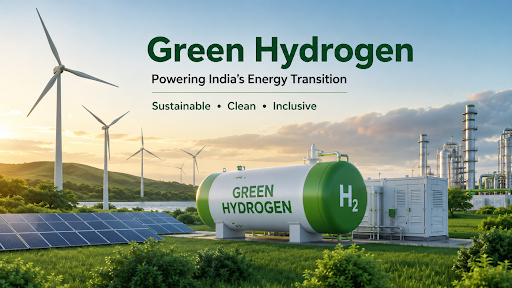
Green hydrogen is hydrogen gas produced via the electrolysis of water utilizing electricity sourced entirely from renewable energy (solar, wind, or hydropower).
-
This process yields zero carbon emissions, releasing only water vapour as a byproduct during fuel cell combustion.

Why is Green Hydrogen Important?
Decarbonising Hard-to-Abate Sectors: Green hydrogen directly replaces coking coal and grey hydrogen in steel, fertiliser, shipping, and heavy transport sectors where direct electrification remains unfeasible.
Reducing Fossil Fuel Imports: The fuel offsets India's heavy reliance on imported crude oil (89%) and natural gas (43%).
Supporting Net-Zero Target: The initiative aims to abate nearly 50 Million Metric Tonnes (MMT) of annual greenhouse gas emissions by 2030, aligning with India's 2070 net-zero target.
Enabling Green Derivatives: Green hydrogen facilitates the Haber-Bosch ammonia synthesis and Direct Reduced Iron (DRI) processes without emitting carbon byproducts.
Enhancing Energy Security: The transition diversifies the national energy mix away from coal, which currently accounts for over 62% of India's electricity generation.

Key Benefits of Green Hydrogen
Near-Zero Carbon Emissions: The process releases zero carbon dioxide, strictly meeting the Ministry of New & Renewable Energy (MNRE) standard of emissions below 2kg CO2/kg H2.
Clean Industrial Growth: Financial incentives under the SIGHT Programme strengthen local manufacturing of electrolysers.
Employment Generation: The sector generates an estimated 6 lakh high-skill and operational jobs by 2030 across the clean energy value chain.
Export Competitiveness: India positions itself to capture 10% of global green hydrogen trade by 2030, supported by Renewable Fuel of Non-Biological Origin (RFNBO) certifications.
Renewable Energy Integration: The industry drives the strategic addition of approximately 125 GW of renewable energy capacity to support massive electrolysis operations.
Concerns from the Kakinada Project
Livelihood Risks: Depleted local fish stocks force fishers to sail 50-100 km into the Bay of Bengal, which increases fuel costs and reduces daily earnings.
Marine Ecosystem Impacts: Desalination plants discharge brine—a high-salinity wastewater containing toxic chlorine and heavy metals (copper, lead, mercury)—which induces hypoxia and destroys bottom-dwelling marine organisms.
Coastal Environmental Threats: Massive industrial infrastructure near the ecologically fragile Coringa Wildlife Sanctuary poses severe threats to coastal biodiversity.
Procedural Justice Failures: Grassroots protests block major supply routes, highlighting how local populations endure pollution without reaping economic benefits.
Major Challenges for Green Hydrogen in India
High Production Costs: Green hydrogen faces steep production costs of $3–6/kg, remaining highly uncompetitive against grey hydrogen ($1–2/kg) without sustained government subsidies.
Massive Land and RE Requirements: Mega-parks for solar and wind demand massive land acquisition, frequently sparking socio-economic conflicts and displacing indigenous communities.
Water Availability Constraints: The process extracts 83 kg of seawater to produce a single kilogram of hydrogen, straining regional water ecosystems and demanding intensive desalination infrastructure.
Storage and Transportation Barriers: High-pressure pipelines or cryogenic storage tanks severely increase the capital expenditure of projects.
Social Acceptance Deficit: Current rules exempt standalone plants from mandatory public consultations, accelerating community distrust and socio-political friction.
Regulatory Gaps: The sector lacks a centralized Just Energy Transition policy that legally mandates labour rights, off-site emergency plans, and strict environmental compliance.

Measures for Sustainable Green Hydrogen Development
Rigorous Environmental Impact Assessments: Mandating quantitative risk assessments and biodiversity evaluations protects nearby habitats.
Community Consultation: Integrating local Gram Sabhas and fishing unions directly into project approval processes achieves procedural justice.
Sustainable Water Management: Treating hazardous brine using nanofiltration and electrodialysis extracts commercially reusable minerals like sodium hydroxide, avoiding raw ocean discharge.
Scientific Ecosystem Monitoring: Deploying real-time monitoring of seawater salinity, heavy metal concentrations, and dissolved oxygen prevents marine hypoxia.
Best Available Technologies: Investing in nanostructured membranes and energy recovery devices slashes desalination energy costs by over 30%.
Fair Compensation and Livelihood Protection: Establishing a dedicated Just Transition Fund finances localized reskilling, protects fisher incomes, and builds alternative regional economies.
Conclusion
A Just Energy Transition requires India to harmonise its ambitious green hydrogen production targets with stringent ecological safeguards and inclusive economic policies that actively protect vulnerable coastal communities.
Source: DOWNTOEARTH
|
PRACTICE QUESTION Q. "Green hydrogen is central to India's clean energy transition, but its large-scale deployment must reconcile environmental sustainability with the livelihoods of local communities." Critically analyse. 150 words |