Why In News?
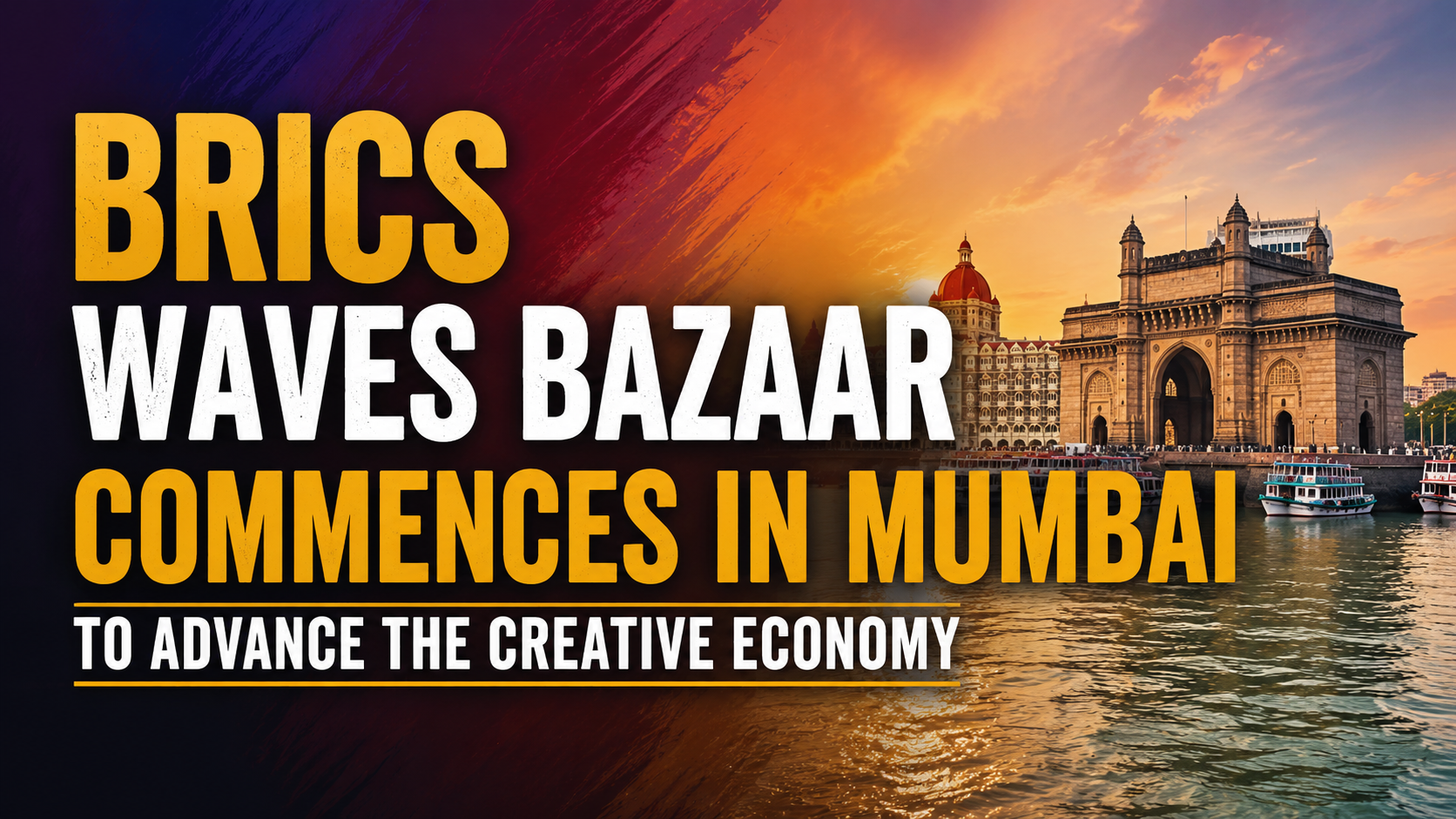
The National Film Development Corporation (NFDC), under the Ministry of Information & Broadcasting, hosted the BRICS WAVES Bazaar in Mumbai.
What Is BRICS WAVES Bazaar?
The Bazaar links India's domestic creative-economy institutions — including the Indian Institute of Creative Technologies and India Cine Hub — to international BRICS partners for joint projects, technology partnerships, talent development, and market access.
Objectives
-
Promote the creative economy: Position the creative economy as a key driver of innovation, entrepreneurship, employment, and economic growth among BRICS nations.
-
Encourage co-production: Facilitate cross-border film, television, and digital content co-productions by connecting producers and financiers.
-
Strengthen cultural exchange: Build on India's civilisational and cultural strengths as a bridge for people-to-people ties across BRICS nations.
-
Attract investment: Open new trade and investment avenues in the audiovisual and creative sectors through direct government-industry dialogue.
-
Support innovation: Showcase and scale emerging technologies, including AI-driven content tools, across participating creative industries.
Which Sectors Are Covered?
-
Film and cinema: Co-production financing, distribution, and market access across BRICS film industries.
-
Television and broadcasting: Cross-border content licensing and broadcast partnerships.
-
OTT platforms: Streaming content collaboration and platform-level partnerships among BRICS digital markets.
-
Animation, VFX and Gaming (AVGC): A specifically flagged growth sector, reflecting India's push to position AVGC as a global outsourcing and co-production hub.
-
Digital media: Emerging content formats and digital-first storytelling platforms.
-
Artificial Intelligence in media: AI-enabled content creation and production tools, discussed as part of the emerging-technologies track.
What is the Creative Economy?
The Creative Economy (also called the Orange Economy) is a knowledge-based economy where creativity, culture, intellectual property (IP), innovation and technology are the primary drivers of economic value, employment, exports and sustainable development.
It covers the creation, production and commercialization of creative goods and services, ranging from arts and crafts to software, gaming and digital media.
Key Features
-
Knowledge and creativity driven: Relies on human creativity, ideas and intellectual capital rather than natural resources.
-
IP-intensive: Generates value through copyrights, trademarks, patents and design rights.
-
Technology-enabled: AI, digital platforms, OTT, gaming, animation and creator ecosystems are major growth drivers.
-
High employment potential: Creates jobs for artists, designers, software developers, filmmakers, musicians, architects and digital creators.
Significance
-
Creative industries contribute 0.5%–7.3% of GDP and 0.5%–12.5% of employment across countries, reflecting their growing role in economic development. (Source: UNCTAD)
-
Global creative services exports reached a record US$1.7 trillion in 2024, accounting for 20% of world services trade, while creative goods exports remained around US$709 billion. (Source: UNCTAD)
-
Cultural and Creative Industries contribute 3.1% of global GDP and employ more young people (15–29 years) than any other sector globally. (Source: UNESCO)
Importance for India
-
Supports Digital India, Startup India, Make in India and the AVGC-XR Mission.
-
Promotes traditional sectors such as handicrafts, handlooms, GI products and cultural tourism while expanding digital industries like gaming, animation and creator platforms.
-
Enhances exports, innovation, employment and India's soft power.
-
Case Study: South Korea's "K-Content" strategy demonstrates how coordinated government support, copyright protection and creative industries can generate global exports, tourism and cultural influence.
Source: DDINDIA
PRACTICE QUESTIONQ. The creative economy is emerging as an important instrument of both economic growth and soft power in India's foreign policy. Discuss (150 words) |