Why In News?
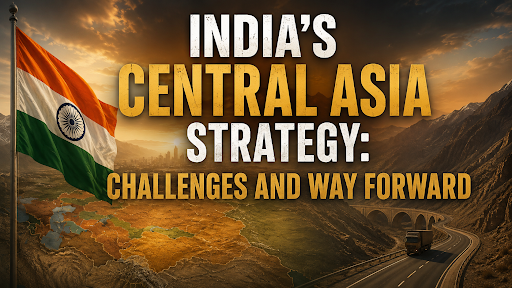
Foreign policy experts emphasize that India must transition from civilisational nostalgia to capability-driven strategic realism in Central Asia to safeguard energy, trade, and connectivity amid evolving global dynamics.
About Central Asia
Central Asia is a landlocked region stretching from the Caspian Sea to China, consisting of five former Soviet republics: Kazakhstan, Kyrgyzstan, Tajikistan, Turkmenistan, and Uzbekistan.
-
Kazakhstan: Largest landlocked nation in the world by area, rich in crude oil, natural gas, and world-leading uranium deposits.
-
Kyrgyzstan: Mountainous nation with vast hydroelectric resources, gold deposits, and extensive educational linkages with India.
-
Tajikistan: Situated bordering Afghanistan, possessing massive freshwater reserves and strategic proximity to India's northern boundaries.
-
Turkmenistan: Holds the world's 4th largest natural gas reserves (notably the Galkynysh field), serving as the starting point of the proposed TAPI gas pipeline.
-
Uzbekistan: Most populous Central Asian country, centrally located in the Fergana Valley, rich in gold, copper, uranium, and cotton.
-
Strategic Location in Eurasia: Sits at the physical crossroads connecting East Asia, South Asia, Russia, the Middle East, and Europe.
-
Landlocked Geography: All five nations are landlocked, with Uzbekistan being one of only two "doubly landlocked" (other is Liechtenstein in Central Europe)countries in the world.

Why is Central Asia Important for India?
Geographical Proximity & Extended Neighbourhood: Forms India’s strategic northern perimeter, essential for continental security and Eurasian balance.
Vast Energy Resources: Abundant reserves of oil (Kazakhstan) and natural gas (Turkmenistan, Uzbekistan) can power India’s industrial growth and diversify its import basket away from West Asian chokepoints.
Critical Minerals & Rare Earth Elements: Holds massive deposits of lithium, cobalt, copper, titanium, and uranium, vital for India’s clean energy transition and semiconductor manufacturing.
-
Kazakhstan alone commands 14% of the world's total uranium resources. It handles over 40% of global output, guaranteeing India a steady high-tech manufacturing pipeline.
Counter-Terrorism Cooperation: Shared imperative to prevent regional radicalisation, religious extremism, and drug trafficking emanating from unstable pockets.
Regional Connectivity Gateway: Acts as India's overland bridge to Russia, the Caucasus, and mainland Europe via multimodal transit corridors.
Trade and Investment Potential: Growing consumer markets for Indian pharmaceuticals, information technology, medical tourism, processed foods, and light engineering goods.
Cultural and Historical Links: Deep civilisational goodwill rooted in Buddhist philosophy, classical music, Bollywood cinema, and historical academic exchanges.
Strategic Access to Eurasia: Prevents any single hostile power from dominating the Eurasian heartland, maintaining a stable multipolar balance.
How is Central Asia Changing?
Growing Regional Unity & Autonomy: The C5 leaders hold regular Central Asian Consultative Meetings, solving regional challenges internally rather than relying on external mediators.
Settlement of Fergana Valley Border Disputes: Historic border delimitation agreements between Uzbekistan, Kyrgyzstan, and Tajikistan have defused decades-old border clashes and unlocked water-sharing cooperation.
Rising Intra-Regional Trade: Trade among the five Central Asian states has surged by more than 60% over the last five years, creating a more integrated economic space.
Emerging Central Asian Community: Growing regional identity that prioritises collective bargaining in international summits (C5+1 formats with the US, EU, China, India, and Japan).
Central Asia-Caucasus Connectivity: Expanding links across the Caspian Sea, integrating Central Asia directly with Azerbaijan, Georgia, and Türkiye via the Middle Corridor.
Major Geopolitical Trends
|
What is India’s Connect Central Asia Policy?
Launched in 2012, it is a comprehensive long-term foreign policy approach to strengthen political, economic, security, and cultural ties with the five Central Asian Republics—Kazakhstan, Kyrgyzstan, Tajikistan, Turkmenistan, and Uzbekistan.
Built around the "4Cs" framework of Commerce, Connectivity, Consular, and Community, the strategy positions the resource-rich region as a vital part of India's extended neighborhood.
Core Pillars and Focus Areas
-
Commerce & Energy: Securing long-term access to oil, natural gas, and uranium for clean energy and industrial growth.
-
Connectivity: Bypassing overland hurdles via Pakistan by advancing regional transit projects like the Chabahar Port route and the International North-South Transport Corridor (INSTC).
-
Security & Defense: Deepening counter-terrorism cooperation, intelligence sharing, and stability initiatives through multilateral platforms like the Shanghai Cooperation Organisation (SCO).
-
Soft Power & Community: Expanding educational exchanges, IT centers of excellence, telemedicine networks, and medical diplomacy.
What are India’s Major Engagement Mechanisms?
India-Central Asia Dialogue: Foreign Ministers' dialogue institutionalized since 2019, steering development cooperation and regional security coordination.
Bilateral Strategic Partnerships: Comprehensive strategic partnerships established with Kazakhstan, Uzbekistan, and Tajikistan.
Shanghai Cooperation Organisation (SCO): India's active participation as a full member since 2017 to engage Eurasian leaders on security and economic agendas.
India-Central Asia Joint Working Groups: Specialized institutional bodies focusing on Chabahar port utilization, Afghanistan, and counter-terrorism.
Development Assistance (ITEC Program): Thousands of Central Asian professionals, engineers, and diplomats trained under the Indian Technical and Economic Cooperation (ITEC) scheme.
Defence Cooperation & Exercises: Annual joint military exercises:
-
Ex-KAZIND with Kazakhstan
-
Ex-DUSTLIK with Uzbekistan
-
Ex-KHANJAR with Kyrgyzstan
Education and Skill Development: Setting up India-Central Asia IT Centers of Excellence and accommodating over 15,000 Indian students in Central Asian medical universities.
Why is India Unable to Compete Directly with Major Powers?
Limited Financial Resources: India cannot match the capital deployment capacity of China, the European Union, or Gulf sovereign wealth funds.
Geographic Disconnection: Lacks the natural land contiguity of Russia and China, and lacks direct Caspian ferry access possessed by Türkiye.
Smaller Bilateral Trade Base: Total bilateral trade represents less than 0.3% of India's global trade basket.
Sanctions Risks on Transit Nodes: Western sanctions on Iran and Russia disrupt banking channels and create secondary compliance hurdles for Indian operators.
Slow Project Implementation: Bureaucratic delays in executing overseas development and connectivity infrastructure.
Why is India Falling Behind China in Central Asia?Direct Geographic Contiguity: China shares a 3,300 km contiguous border with Kazakhstan, Kyrgyzstan, and Tajikistan, allowing direct pipeline and highway construction from Xinjiang. Massive Infrastructure Investment: China has invested over $50 billion in Central Asian transport, refining, and mining projects under the Belt and Road Initiative (BRI). Energy Pipeline Dominance: China built the Central Asia-China Gas Pipeline network (Lines A, B, C), sourcing over 15% of its total natural gas imports from Turkmenistan and Uzbekistan. Trade Integration Asymmetry: China-Central Asia trade exceeds $100 billion, compared to India’s modest trade volume of approximately $2.5–3.0 billion. Large-Scale Concessional Financing: Chinese state banks offer massive, low-interest sovereign loans that outpace India’s limited Line of Credit facilities. |
What are the Major Challenges for India?
Physical Connectivity Deficit: The absence of contiguous land access remains the single largest barrier to scaling commercial trade.
Persistent Low Trade Volume: Bilateral trade stagnates around $2.5–3.0 billion, constrained by high shipping costs.
Geopolitical Risks in Iran: Sanctions uncertainties surrounding Chabahar Port discourage private commercial shipping lines.
Non-Convertibility of Currencies: Lack of direct Rupee-Tenge or Rupee-Som banking settlements forces reliance on hard foreign currencies.
Limited Direct Air Freight Connectivity: Inadequate dedicated cargo flights limit exports of perishable high-value goods.
Strong Entrenched Competitors: Dominant market presence of Chinese consumer goods, Russian machinery, and Turkish construction firms.
Way Forward
Transition from Romance to Strategic Realism: Anchor foreign policy in verifiable economic deliverables, trade facilitation, and technology transfer rather than historical nostalgia.
Prioritise Energy & Critical Minerals Pacts: Deepen long-term uranium procurement with Kazakhstan and secure rare earth exploration rights in Uzbekistan.
Leverage Digital & Health Diplomacy: Scale India’s comparative advantages in generic pharmaceuticals, hospital construction, and Digital Public Infrastructure.
Support Central Asian Regional Integration: Partner with the emerging Central Asian regional architecture to build stable, multilateral economic corridors.
Maintain Long-Term Strategic Consistency: Allocate dedicated budgetary resources for overseas project execution to ensure credible and timely delivery.
Expand Diplomatic outreach
-
Respect Central Asian Strategic Autonomy: Treat Central Asian states as independent geopolitical actors rather than viewing them through the lens of a "New Great Game".
-
Avoid Patron-Client Rhetoric: Base diplomacy on mutual economic utility, sovereign equality, and mutual capacity building.
-
Practice Diplomatic Agility in the Caucasus & Caspian: Maintain flexible diplomatic engagement with regional transit hubs, including Azerbaijan and Türkiye, to expand logistical options.
Enhance Connectivity
-
Fast-Track Chabahar Port Terminal Automation: Complete installation of heavy container cranes and automate cargo clearances at Shahid Beheshti port.
-
Resolve INSTC Bottlenecks: Encourage private Indian freight forwarders and insurance providers to use the western INSTC railway link.
-
Engage with the Caspian Middle Corridor: Establish economic and logistics dialogues with Caspian littoral states (Azerbaijan, Türkiye) to explore cargo routing options.
-
Harmonise Customs & Logistics Protocols: Implement the TIR Convention (Transports Internationaux Routiers) protocols across all border crossings to streamline container inspections.
Conclusion
To secure long-term strategic relevance, India’s Eurasian strategy must ground historical relations in capability-aligned realism through Digital Public Infrastructure, critical mineral pacts, and triangular partnerships.
Source: indianexpress
|
PRACTICE QUESTION Q. Discuss the strategic significance of Central Asian critical minerals and energy reserves for India's clean energy transition. (10 Marks, 150 Words) |